
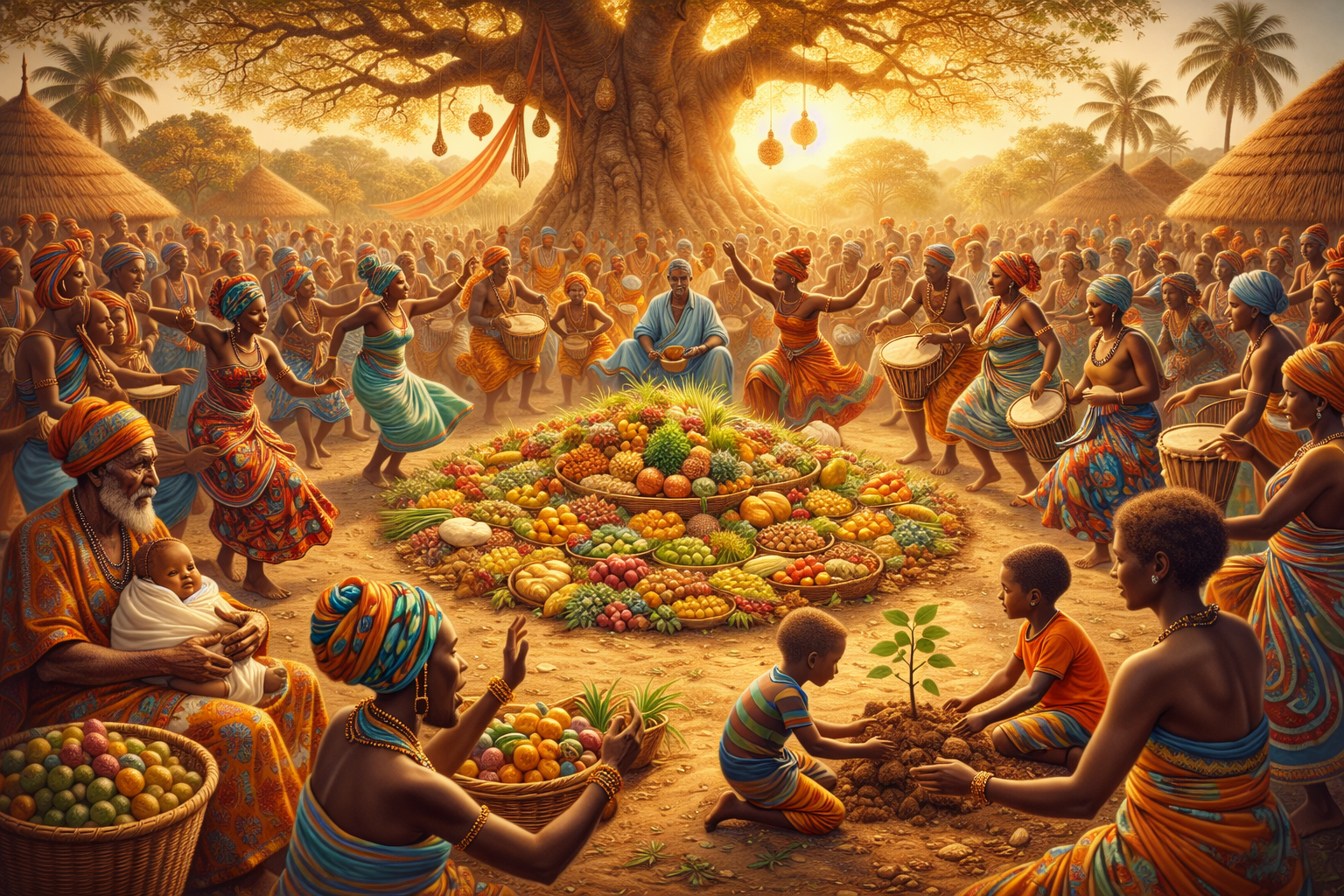
Kwanzaa, rooted in African cultural traditions, is a celebration of the harvest and a profound reflection on the circle of life. Observed annually from December 26 to January 1, Kwanzaa derives its name from the Swahili phrase matunda ya kwanza, meaning “first fruits.” This connection to the harvest emphasizes gratitude for the abundance of the earth, the efforts of the community, and the promise of the future symbolized by the seeds we sow—both in the soil and in our children.
The Harvest as a Symbol of Life’s Sustenance
In many African cultures, harvest festivals mark a time of thanksgiving, community gathering, and renewal. These celebrations recognize the earth’s ability to provide and humanity’s role in nurturing it. For the African-American community, Kwanzaa extends this concept by focusing on cultural harvest—honoring the achievements, resilience, and potential of the community.
Harvest is more than just reaping crops; it represents sustenance, survival, and the interdependence of life. By celebrating the harvest during Kwanzaa, participants acknowledge the labor, cooperation, and hope that make abundance possible.
The Unbroken Circle of Life
Kwanzaa reflects the uninterrupted and continuous cycle of life. Just as the seasons turn and seeds grow into plants that bear fruit, life moves forward in an unending rhythm. The harvest symbolizes not just the rewards of the past year but also the promise of what is to come.
In this context, the circle of life includes honoring ancestors, who laid the groundwork for the present, while investing in the future through children and youth. The unity between these generations creates a continuum of growth, wisdom, and achievement.
The Kinara, central to Kwanzaa celebrations, underscores this concept. The seven candles represent the Seven Principles (Nguzo Saba), which guide individuals and communities in perpetuating the circle of life by ensuring harmony, purpose, and faith in the collective future.
Children as the Seeds of the Future
In African traditions, children are often likened to seeds, embodying the potential to grow and flourish under the nurturing care of their families and communities. During Kwanzaa, children are central to the celebration, as they represent the future and the continuation of cultural heritage.
When we plant seeds in the soil, we tend to them with love and patience, understanding that their growth is a process. Similarly, children require guidance, education, and a supportive environment to thrive. Kwanzaa encourages families to instill the Seven Principles in their children, shaping them into individuals who will sustain the community’s legacy.
By teaching children the value of unity, self-determination, collective work, creativity, and faith, Kwanzaa helps them understand their role in the cycle of life. It reminds them that their actions today will sow the seeds of tomorrow’s harvest, ensuring the community’s prosperity and resilience.
The Importance of Celebrating Harvest and Life’s Continuity
Celebrating the harvest is a reminder of life’s interconnectedness. It teaches gratitude for the earth’s gifts and respect for the effort required to cultivate them. In a broader sense, it reminds us of the need to nurture relationships, community, and traditions to sustain cultural and spiritual wealth.
Kwanzaa’s harvest celebration is also a call to action. It challenges participants to reflect on the seeds they are planting in their lives—both literal and metaphorical. Are we sowing seeds of love, unity, and progress? Are we teaching the next generation to honor their roots while reaching for new heights? Are we cultivating the resources and relationships that will bear fruit for years to come?
The Seeds of Kwanzaa: A Legacy for the Future
Kwanzaa is not just a holiday; it is a reminder of our responsibility to the earth, our community, and future generations. By celebrating the harvest, we honor the past, find meaning in the present, and look forward to the future. The seeds we plant today—through our actions, teachings, and care—will blossom into tomorrow’s harvest.
Children, as the embodiment of those seeds, are central to this vision. They are the carriers of culture, the inheritors of tradition, and the builders of a better world. Through Kwanzaa, we teach them to embrace the continuous circle of life, ensuring that the harvest will always be plentiful, the community will always thrive, and the future will always be bright.

