
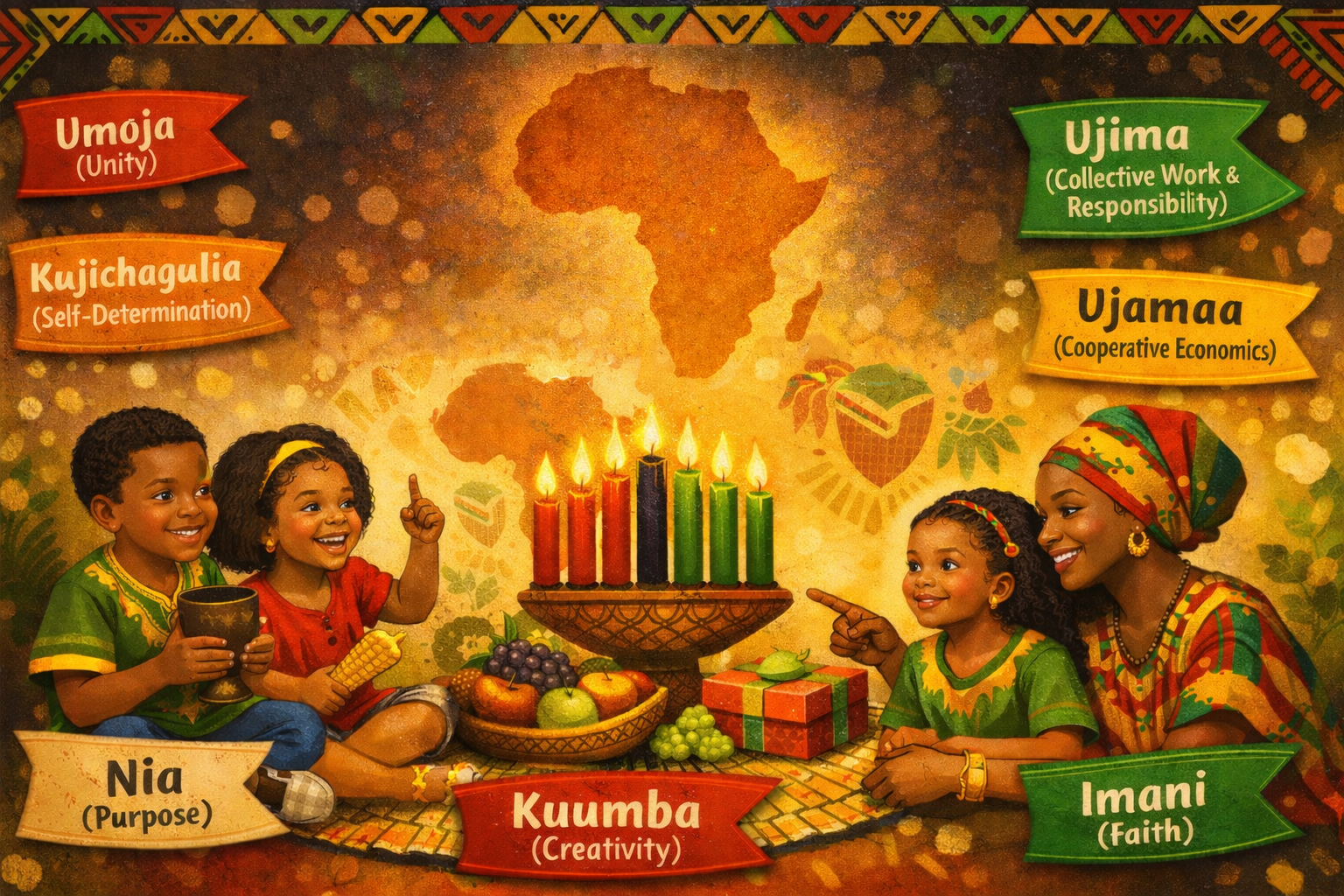
Kwanzaa’s foundation is the Nguzo Saba—the Seven Principles. These guiding values reflect the core of African philosophy and culture, offering a roadmap for building strong families, communities, and futures. For children, these principles provide powerful lessons about their role and value within the African community and beyond.
Let’s explore each principle with real-life examples and ways they can be taught to children.
1. Umoja (Unity)
To strive for and maintain unity in the family, community, nation, and race.
- Example: A community organizing a neighborhood cleanup day where families work together to beautify their environment demonstrates unity.
- Teaching Children: Encourage kids to participate in family traditions, like eating meals together or helping their siblings with homework. You can explain that unity means standing together and supporting one another, even when things are challenging.
- Activity for Kids: Create a family tree together and talk about how everyone in the family contributes to its strength. Emphasize that their role, no matter how small, is essential.
2. Kujichagulia (Self-Determination)
To define ourselves, name ourselves, create for ourselves, and speak for ourselves.
- Example: A young African-American student starting a school club that celebrates African heritage and shares stories of cultural pride is practicing self-determination.
- Teaching Children: Encourage children to set personal goals, whether it’s mastering a new skill or taking responsibility for their own chores. Help them understand that being confident in who they are is a step toward shaping their future.
- Activity for Kids: Ask them to write or draw a story about who they want to be when they grow up. Reinforce that their identity and aspirations are valuable.
3. Ujima (Collective Work and Responsibility)
To build and maintain our community together and make our brothers’ and sisters’ problems our problems and solve them together.
- Example: A group of families coming together to build a local garden to provide fresh produce for the neighborhood shows collective work and responsibility.
- Teaching Children: Teach children the importance of helping others. For example, involve them in volunteering at a food drive or assisting a neighbor with small tasks. Explain that working together makes the community stronger.
- Activity for Kids: Organize a group project, like cleaning up a park or baking treats for a local shelter, where they can actively contribute to a shared goal.
4. Ujamaa (Cooperative Economics)
To build and maintain our own stores, shops, and other businesses and to profit from them together.
- Example: A family choosing to shop exclusively at Black-owned businesses or a child starting a small lemonade stand to raise money for a local cause embodies cooperative economics.
- Teaching Children: Teach children the value of supporting community businesses. Explain that by buying from local stores, they are helping their neighbors thrive.
- Activity for Kids: Help them set up a small “business,” such as selling crafts or baked goods, and decide how the profits can benefit the family or community.
5. Nia (Purpose)
To make our collective vocation the building and developing of our community in order to restore our people to their traditional greatness.
- Example: Mentorship programs where successful African-American professionals guide younger generations exemplify purpose.
- Teaching Children: Explain that purpose is about contributing to the betterment of others. Encourage them to think about how their unique talents can help their family or community.
- Activity for Kids: Ask children to draw a picture of what they think a better world looks like and discuss how they can help create it.
6. Kuumba (Creativity)
To always do as much as we can, in the way we can, to leave our community more beautiful and beneficial than we inherited it.
- Example: A community mural that tells the story of African history and celebrates cultural pride is a vivid example of creativity.
- Teaching Children: Encourage children to express their creativity through art, music, or storytelling. Teach them that creativity isn’t just about making things pretty—it’s about solving problems and inspiring others.
- Activity for Kids: Create a family art project where everyone contributes to making something that reflects your shared values or history.
7. Imani (Faith)
To believe with all our heart in our people, our parents, our teachers, our leaders, and the righteousness and victory of our struggle.
- Example: A family gathering to honor ancestors and reflect on the progress made by previous generations demonstrates faith.
- Teaching Children: Share stories of historical African leaders and everyday heroes who have made a difference. Explain that faith means believing in themselves and their community.
- Activity for Kids: Encourage children to create a “hope jar,” where they write down their dreams and goals. Revisit these dreams regularly to remind them of their potential and purpose.
The Impact of the Principles on Children
By teaching children the Seven Principles of Kwanzaa, we equip them with the tools to see their worth and contributions within the community. These lessons provide a framework for how they can live with intention, contribute to their surroundings, and be proud of their heritage.
Kwanzaa is not just a celebration—it’s a cultural curriculum that reinforces identity, unity, and empowerment. As children grow up embodying these values, they become leaders who honor their roots while building a brighter future for the African community.

