
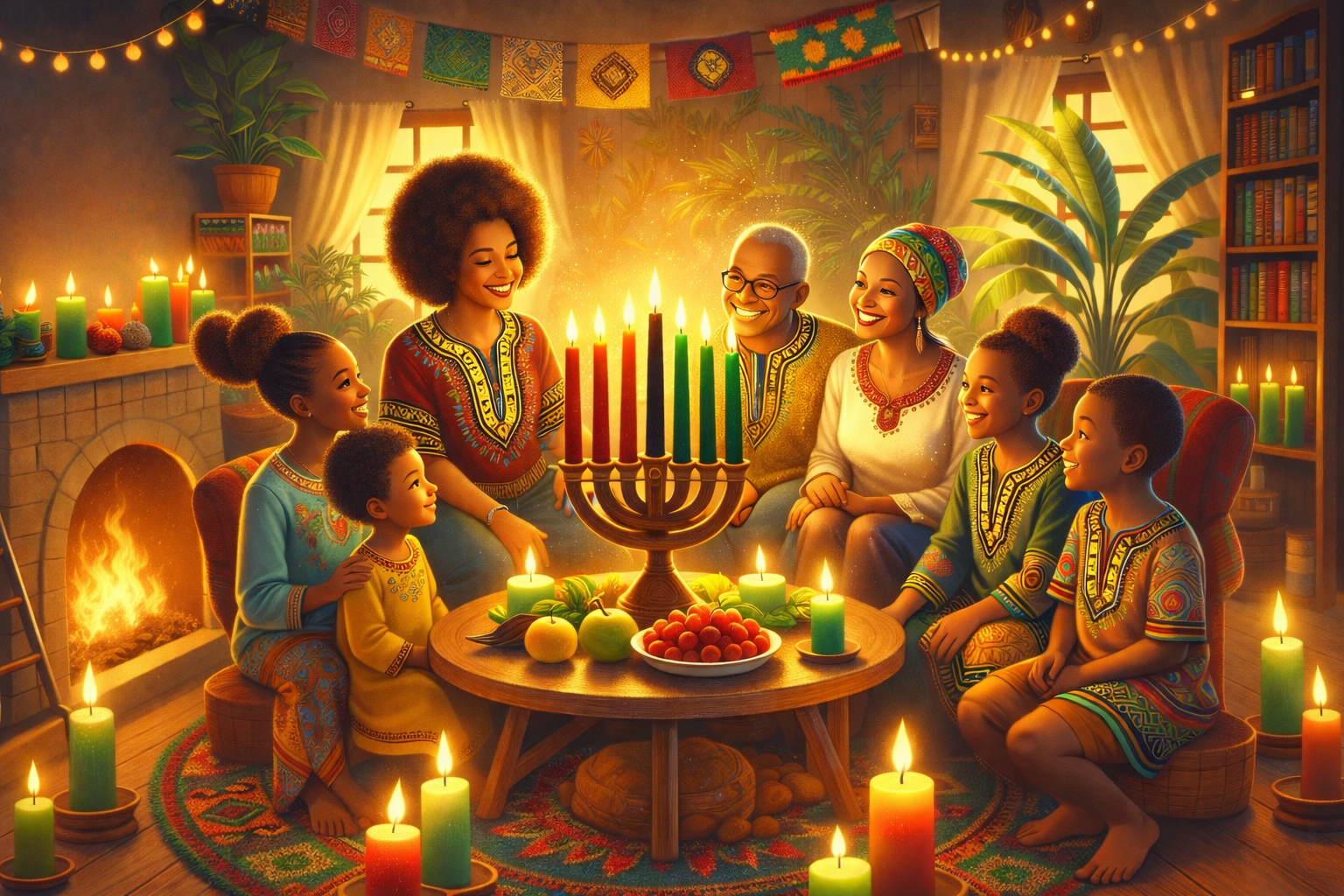
Kwanzaa is a week-long celebration that honors African heritage, culture, and the enduring spirit of community. Observed from December 26 to January 1, it is a time for African-American families and communities to come together, reflect on shared values, and celebrate their history and future. Dr. Maulana Karenga, a professor of Africana Studies, founded Kwanzaa in 1966 amidst the Black Freedom Movement, emphasizing cultural unity and self-determination.
The Roots of Kwanzaa in African Traditions
The word “Kwanzaa” is derived from the Swahili phrase matunda ya kwanza, meaning “first fruits.” This links the holiday to African harvest festivals, where communities celebrate abundance, unity, and gratitude. These festivals were traditionally a time to honor the land, the hard work of farmers, and the interconnectedness of community life.
For the African-American community, Kwanzaa serves as a way to reconnect with these ancestral traditions, fostering a sense of pride in their roots. It is a counterbalance to a history marked by displacement and oppression, providing a platform to affirm the beauty, strength, and creativity of African culture.
The Seven Principles: Anchoring Kwanzaa’s Meaning
At the heart of Kwanzaa are the Nguzo Saba—the Seven Principles. These principles provide a framework for how individuals and communities can live harmoniously and purposefully:
- Umoja (Unity): Promoting togetherness within families, communities, and the African diaspora.
- Kujichagulia (Self-Determination): Encouraging individuals to define themselves and their futures.
- Ujima (Collective Work and Responsibility): Building and maintaining the community together.
- Ujamaa (Cooperative Economics): Supporting and uplifting Black-owned businesses and enterprises.
- Nia (Purpose): Committing to the collective upliftment and restoration of the African-American community.
- Kuumba (Creativity): Enhancing the community through innovation and artistic expression.
- Imani (Faith): Believing in the community’s ability to overcome challenges and thrive.
Each principle resonates deeply with the challenges and aspirations of the African-American experience, offering guidance and empowerment.
Kwanzaa’s Role in Shaping Identity for Children
For children, Kwanzaa is especially significant. It introduces them to African heritage in a tangible and celebratory way, instilling pride in their identity and history. Through storytelling, music, and dance, children learn about the resilience and achievements of their ancestors.
Lighting the Kinara (candleholder) during Kwanzaa is a symbolic act, with each candle representing one of the Seven Principles. This ritual teaches children the importance of values like unity, responsibility, and creativity. It provides a foundation for understanding their role in building a better future for their community.
Additionally, Kwanzaa encourages children to see themselves as part of a larger collective. By participating in community events, sharing meals, and exchanging homemade gifts, they experience the joy of contributing to and benefiting from a vibrant, supportive network.
Empowering the African Community
For adults, Kwanzaa is an opportunity to reflect on their shared struggles and triumphs. It emphasizes economic empowerment, urging the community to invest in Black-owned businesses and initiatives. The celebration also highlights the importance of education and mentorship, ensuring that future generations inherit a legacy of resilience and achievement.
The holiday is a time to honor historical figures who fought for justice and equality while inspiring current and future leaders. By revisiting stories of perseverance and courage, Kwanzaa reinforces the community’s commitment to social progress and collective well-being.
A Celebration for All
While Kwanzaa is deeply rooted in African heritage, its principles of unity, purpose, and creativity are universal. It invites people of all backgrounds to reflect on how they can contribute to a more just and equitable world.
For the African-American community, however, Kwanzaa is more than a celebration—it is a declaration of identity, a tribute to ancestral wisdom, and a vision for the future. For children, it is an introduction to a rich cultural heritage; for adults, it is a reaffirmation of commitment to the community.
In a world that often undervalues Black culture and history, Kwanzaa stands as a powerful reminder of the beauty, strength, and resilience of the African spirit. Through its rituals, principles, and celebrations, Kwanzaa offers hope and purpose, not just for the present, but for generations to come.

